
Mitochondrial Biogenesis. Food to Fuel Basics.
Boost Your Energy with Mitochondrial Biogenesis. Mitochondria are more than just the „powerhouses of the cell“. They are the energy command centers of your entire biology. When they work optimally, they convert food and oxygen into clean, long-lasting energy. When they decline, so do your endurance, focus, and vitality.
⚡ Stunning Fact: Mitochondria create over 90% of your body’s ATP, the universal energy currency. Even a 20% drop in mitochondrial function has been linked to early aging and chronic fatigue.
Key Takeaways
- Mitochondrial biogenesis combats low energy by creating new energy factories in your cells
- Daily movement stimulates mitochondrial renewal
- Nutrient-rich foods are essential for efficient energy metabolism
- Stress, poor sleep, and toxins directly damage mitochondrial DNA
- Early support helps prevent fatigue-related disorders and supports long-term vitality
| Food Source | PQQ Context | Why it works |
| Natto | Highest Source | This Japanese fermented soybean dish contains the highest known concentration of PQQ (up to 61 ng/g). |
| Miso | High | Fermented soybean paste provides a steady supply of PQQ along with probiotic benefits. |
| Tempeh | Moderate | The fermentation process makes the nutrients and PQQ more accessible than in plain soybeans. |
| Red Wine | Trace | While not a primary source, the fermentation of grapes retains small amounts of PQQ. |
| Cocoa / Dark Chocolate | Moderate | Fermented cacao beans are a significant dietary source of PQQ and polyphenols. |

Understanding Mitochondrial Basics
Mitochondria are like mini nuclear reactors, producing ATP by processing nutrients and oxygen through a process called oxidative phosphorylation.
Your heart contains the highest mitochondrial density in the body – over 5,000 per cell – due to its constant need for energy.
Lifestyle Factors That Fuel or Fail Your Mitochondria:
- ✅ Balanced nutrition = raw materials for ATP synthesis
- 🏃♂️ Exercise = triggers mitochondrial renewal
- 😴 Quality sleep + low stress = stabilizes energy metabolism
How Cellular Respiration Keeps You Alive
Glucose breakdown → Krebs Cycle → Electron Transport Chain → ATP
This multi-step process is your body’s internal combustion engine. Without it, your cells stop working and so do you.
Quick Breakdown of ATP Pathway
| Stage | Key Outcome |
|---|---|
| Glycolysis | Prepares glucose for energy conversion |
| Krebs Cycle | Generates NADH and FADH2 for ATP use |
| Electron Transport | Final ATP production (bulk output) |
The Krebs cycle, also known as the citric acid cycle or tricarboxylic acid cycle, is a central metabolic pathway in the cell. It takes place in the mitochondria and plays a crucial role in energy production. In the Krebs cycle, acetyl-CoA molecules derived from carbohydrates, fats, and proteins are oxidized. This produces energy-rich molecules such as NADH and FADH2, which are later used in the respiratory chain to synthesize ATP. The cycle comprises several enzymatic steps in which intermediates such as citrate, isocitrate, α-ketoglutarate, and succinate are formed. In addition, the Krebs cycle provides precursor molecules for various biosynthetic pathways.
Signs of Weak Mitochondrial Function
When energy output drops, symptoms creep in, slowly, then all at once:
- Morning fatigue, even after sleep
- Mood dips and brain fog
- Muscle aches and slow recovery
- Chronic tiredness not fixed by rest
🧪 Fact: Mitochondrial dysfunction is a recognized early marker in conditions like Parkinson’s, Alzheimer’s, and Type 2 Diabetes.
Mitochondrial DNA Replication and Its Role in Vitality
Healthy mitochondrial DNA = healthy energy flow. But oxidative stress, toxins, and poor nutrition can damage these tiny blueprints.
Top Nutrients to Support Mitochondrial DNA Stability:
- Magnesium – cofactor in over 300 enzyme systems
- B-complex vitamins – crucial for mitochondrial replication
- CoQ10 – protects the mitochondrial membrane & enhances ATP production
Low CoQ10 levels are linked to statin use and chronic fatigue syndrome.
🔁 Mitochondrial Biogenesis = The Real Anti-Fatigue Hack
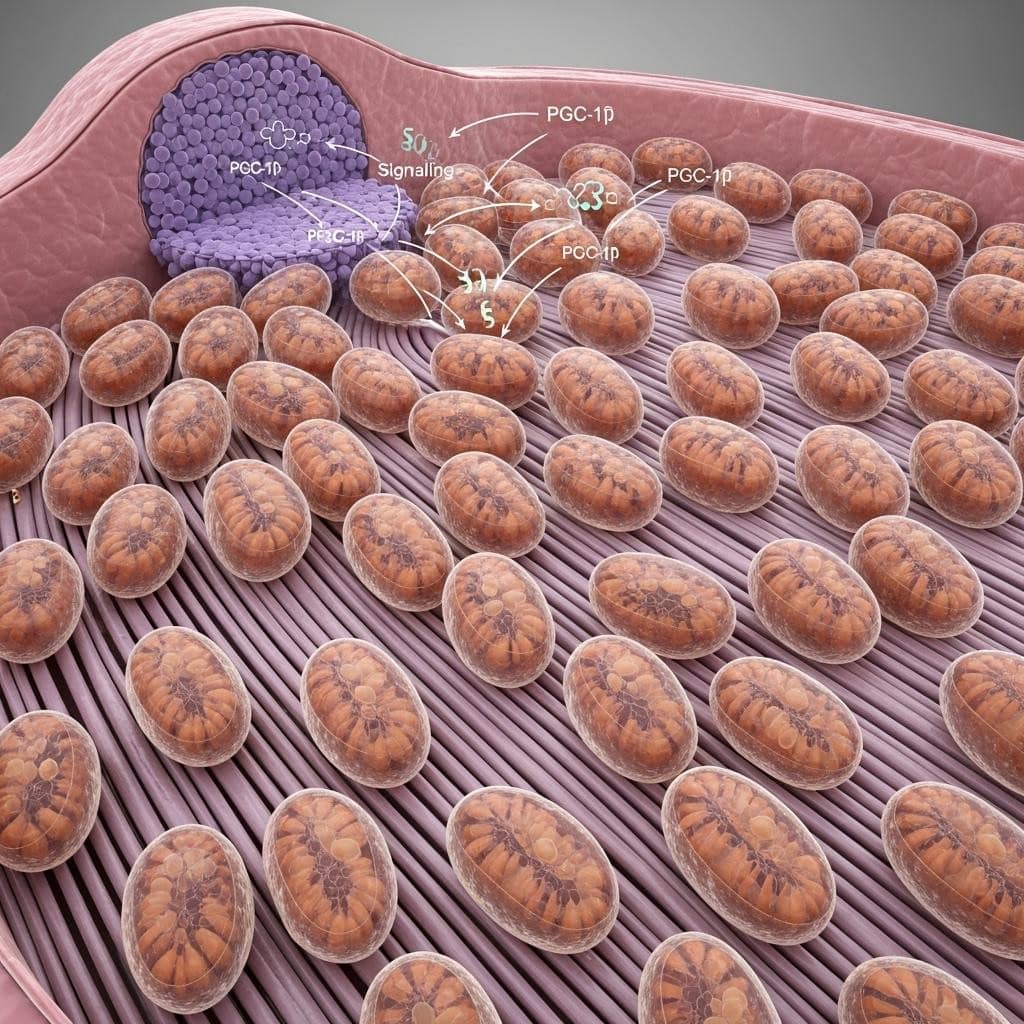
Biogenesis is the process of building new mitochondria. The more you have, the more energy capacity your body has, like upgrading to a bigger battery pack.
Triggers of Mitochondrial Biogenesis
- HIIT (High-Intensity Interval Training)
- Cold exposure (cryotherapy, ice baths)
- Intermittent fasting and ketosis
- Key nutrients (e.g., PQQ, resveratrol, NR/NMN)
- Red/NIR light therapy (photobiomodulation)
2024 study (Cell Metabolism): Just 6 weeks of HIIT increased mitochondrial content by 40% in healthy adults.

Nutrition That Powers Cellular Energy
Mitochondria are metabolically demanding. They require a constant supply of cofactors, antioxidants, and clean fuel to work optimally.
Mitochondria-Supportive Superfoods
| Nutrient | Function |
|---|---|
| Omega-3 Fats | Supports membrane fluidity & electron transfer |
| Vitamin C | Scavenges ROS, regenerates glutathione |
| Magnesium | Essential for ATP-binding (ATP is Mg-ATP) |
Also key:
- Avocados, salmon, blueberries, spinach
- Fermented foods → support the gut-mitochondria axis
- Dark chocolate (rich in polyphenols)
Top Biohacker Supplements
These mitochondrial-targeted supplements are gaining traction in both research and the biohacking world.
1. PQQ (Pyrroloquinoline Quinone)
- 🔬 Stimulates mitochondrial biogenesis
- 🛡️ Potent antioxidant – protects against oxidative stress
- 🧠 Enhances cognition and fatigue resistance
- Overall Effectiveness Index: 8.2/10
2. CoQ10 (Ubiquinone/Ubiquinol)
- ⚙️ Central in the electron transport chain
- 🛡️ Reduces oxidative stress in mitochondria
- ❤️ Often used in heart disease and chronic fatigue protocols
- Overall Effectiveness Index: 7.9/10
3. NAD+ Precursors (NR/NMN)
- 🔁 Crucial for cellular repair, DNA expression, sirtuin activation
- 🧠 Improves focus, sleep, and metabolic resilience
- ⚡ Used in longevity and anti-aging circles
- Overall Effectiveness Index: 7.5/10
Recent Research & Biohacking Trends
Scientific Interest:
- Active research ongoing (esp. in aging, neurodegeneration, and exercise science)
- 🔬 2023 saw over 1,500 peer-reviewed papers on mitochondrial biogenesis
Community Insight (Rating: 8.5/10):
- Reddit’s r/Biohackers and Longevity forums report increased use of PQQ, NMN, and photobiomodulation
- Top health influencers like Dr. Rhonda Patrick and Andrew Huberman emphasize mitochondrial health as a core aging biomarker
What to Expect Timeframes for Mitochondrial Gains
| Intervention | Onset of Effect |
|---|---|
| HIIT / resistance training | 1–2 weeks (initial biogenesis) |
| NAD+ precursors | 2–4 weeks (cell repair) |
| CoQ10 / PQQ | 3–7 days (perceived energy) |
| Nutrition / sleep | Continuous, cumulative |
🧠 From Fatigue to Focus. Real-World Strategies That Work
Daily Energy Protocol (Optimized):
| Habit | Benefit |
|---|---|
| Cold exposure (2–5 min) | ↑ Mitochondrial resilience |
| Fasted walking (morning) | Triggers mitochondrial biogenesis |
| Antioxidant-rich breakfast | ↓ Oxidative stress |
| Strength training (3x/week) | ↑ Mitochondrial density |
| Sleep hygiene | Supports DNA repair |
Early Detection: Mitochondrial Dysfunction Warning Signs
Don’t ignore signals like persistent fatigue, brain fog, or slow recovery. These are red flags from your cellular energy systems.
🧬 Consider getting functional labs:
- Mitochondrial biomarkers
- CoQ10, NAD/NADH ratio
- Oxidative stress panel
Lifestyle Is Your Best Mitochondrial Supplement
Supplements are powerful—but nothing replaces a daily solid foundation:
- 💪 Resistance + aerobic training combo
- 🌙 7–9 hours of sleep with full REM cycles
- 🥗 Mito-nutrient-dense diet
- 🧘♀️ Stress modulation = lower mitochondrial DNA damage
- 🌞 Sunlight (Vitamin D + circadian entrainment)
🎯 Conclusion: Energize from the Inside Out
Mitochondrial health is not just a biohacking trend, it’s the foundation of longevity, vitality, and mental clarity.
🌟 You don’t just age over time. You age when your mitochondria stop working.
With every step, bite, breath, and recovery cycle, you’re either upgrading or draining your energy systems.
Choose wisely. Your mitochondria are listening.
🧬 Mitochondrial Supplement Overview Table
| Supplement | Effect on Mitochondria | Suggested Dosage | Onset of Effects | Biohacker Effectiveness Index (1–10) |
|---|---|---|---|---|
| PQQ | Promotes mitochondrial biogenesis, powerful antioxidant | 10–20 mg/day | 3–7 days (noticeable) | 8.2 |
| CoQ10 (Ubiquinol) | Supports the electron transport chain, protects mitochondrial membrane | 100–200 mg/day | 1–2 weeks | 7.9 |
| NAD+ Precursors (NMN/NR) | Boosts cellular repair, energy, sirtuin activation | 250–500 mg/day | 2–4 weeks | 7.5 |
| Magnesium | Cofactor in ATP production, supports over 300 enzyme systems | 300–400 mg/day (citrate/glycinate) | 3–5 days | 7.2 |
| B-Complex | Supports DNA synthesis and mitochondrial enzyme activity | 1x standard daily dose | ~1 week | 7.0 |
| Acetyl-L-Carnitine | Transports fatty acids into mitochondria, improving fat-based energy | 500–1,000 mg/day | ~1 week | 7.4 |
| Creatine | Buffers ATP energy in muscles, boosts mitochondrial resilience | 3–5 g/day | 5–7 days | 7.5 |
Key Terms:
- Effectiveness Index = Combined score from scientific research, user feedback (forums, reviews), and subjective benefits
- Onset of Effects = When users typically notice energy, focus, or stamina improvements
✅ Simplified Mitochondria Stack for Biohacking Beginners
Daily Mitochondria Stack (Basic Starter Version)
| Morning | Midday | Evening |
|---|---|---|
| 🟢 PQQ (10–20 mg) + CoQ10 (100 mg) | 🔵 Magnesium (200–300 mg) + B-Complex | 🌙 Magnesium Bisglycinate (200 mg) |
Why This Stack Works for Beginners
- 🟢 PQQ + CoQ10 (Morning)
These two support mitochondrial biogenesis, ATP production and protect against oxidative stress. Great for kickstarting energy and focus. - 🔵 Magnesium + B-Complex (Midday)
Helps with ATP metabolism, nervous system function, and mental performance—especially helpful during your most productive hours. - 🌙 Magnesium Bisglycinate (Evening)
Calms the nervous system and supports deep sleep — crucial for overnight mitochondrial repair. This form is gentle on digestion and highly bioavailable.
Why NMN, NR, ALA, or Carnitine Aren’t Necessary (Yet)
- These advanced supplements are powerful but often pricey, stimulating, or metabolically intense — not always suitable for beginners.
- It’s better to build a strong foundation first and then layer in more complex compounds later.
Quick Tip for Beginners
🚀 Start with 3–4 days per week to assess how your body responds. Monitor your energy, focus, and sleep.
After 2–3 weeks, if everything feels good, move to a daily routine.
🔄 Bonus: Low-Energy Morning Kickstart Stack
| Supplement | Primary Benefit |
|---|---|
| PQQ (10 mg) | Boosts new mitochondrial growth |
| CoQ10 (100 mg) | Enhances cellular energy and heart function |
| Magnesium (200 mg) | Supports nerve function and ATP stability |
| Water + Sea Salt | Replenishes electrolytes and cell hydration |
Cellular respiration
Think of it like this: Your body takes in food (like glucose) as fuel. Cellular respiration is the process of converting that fuel into usable energy (ATP) that powers everything you do, from thinking to moving.
Here are the details of each stage:
- Glucose Breakdown (Glycolysis)
This is the „splitting of sugar“ and it’s the very first step. It doesn’t even require oxygen.
Where it happens: In the cytoplasm of your cells (the jelly-like substance filling the cell).
What happens: A single molecule of glucose (a 6-carbon sugar) is split into two smaller molecules called pyruvate (each with 3 carbons).
Analogy: Imagine you have a large log (glucose) that’s too big to fit into a furnace. Glycolysis is like splitting that log into two smaller, more manageable pieces (pyruvate).
Energy Output: This process creates a tiny bit of energy on its own: a net gain of 2 ATP molecules. It also „charges up“ some energy-carrier molecules called NADH.
- The Krebs Cycle (also known as the Citric Acid Cycle)
This is the next major phase. The two pyruvate molecules from Glycolysis now enter the cell’s „powerhouse.“
Where it happens: Inside the mitochondria.
What happens: The two pyruvate molecules are processed and enter a circular series of chemical reactions. The cycle’s main job is to completely break down what’s left of the glucose, harvesting its energy.
Analogy: The smaller logs (pyruvate) are now thrown into a high-efficiency furnace (the Krebs Cycle). The furnace burns them completely, releasing energy and producing smoke (CO₂). The main goal isn’t the small amount of heat (ATP) it generates directly, but to capture the high-energy particles from the fire.
Energy Output:
A tiny bit more ATP is made directly: 2 ATP molecules.
The most important product is a large number of charged-up energy carriers (NADH and FADH₂). Think of these as fully charged batteries.
A waste product is created: Carbon Dioxide (CO₂), which you exhale.
- The Electron Transport Chain (ETC)
This is the grand finale where the vast majority of energy is made. It requires the oxygen you breathe.
Where it happens: In the inner membrane of the mitochondria.
What happens: The charged-up batteries (NADH and FADH₂) from the Krebs Cycle deliver their high-energy electrons to a series of proteins embedded in the membrane. As the electrons are passed down this „chain“ of proteins, their energy is used to pump protons (H⁺) to one side of the membrane, creating a steep gradient.
Analogy: Imagine a hydroelectric dam. The charged batteries (NADH/FADH₂) dump their energy (electrons) at the top. This energy is used to pump massive amounts of water (protons) to one side of the dam, building up immense pressure.
The Role of Oxygen: Oxygen is the crucial final step. It sits at the very end of the chain and accepts the now low-energy electrons. Without oxygen, the chain would get clogged, and the whole process would stop. When oxygen accepts the electrons, it also combines with protons to form water (H₂O).
- ATP Synthesis (Putting it all together)
This is directly linked to the Electron Transport Chain.
What happens: The huge buildup of protons on one side of the membrane wants to flow back to the other side to balance things out. They can only flow through a special protein channel called ATP Synthase.
Analogy: The built-up water behind the dam (the proton gradient) is released, and it rushes through the turbines (ATP Synthase). The massive force of the flowing water spins the turbines at incredible speed.
Energy Output: The spinning of the ATP Synthase turbine provides the energy to take a low-energy molecule (ADP) and attach a phosphate to it, creating the high-energy molecule ATP. This single step produces a massive amount of energy: about 32 to 34 ATP molecules!
Summary
| Stage | Location | What Goes In | What Comes Out |
|---|---|---|---|
| 1. Glycolysis | Cytoplasm | Glucose | 2 Pyruvate, 2 ATP, NADH |
| 2. Krebs Cycle | Mitochondria | Pyruvate | CO₂, 2 ATP, Lots of NADH & FADH₂ |
| 3. ETC & ATP Synthesis | Mitochondria | NADH, FADH₂, Oxygen | Water, ~34 ATP |
So, from one molecule of glucose, your body efficiently generates up to 38 ATP molecules. This ATP is the universal energy currency that keeps your cells running, your muscles contracting, and ultimately, keeps you alive.
Metaphorical explanation of cellular respiration
Imagine your body as a bustling city. This city constantly needs energy to function. The food you eat (glucose) is like a delivery of crude oil to the city—a potent energy source, but not directly usable.
The process of converting this crude oil into the electricity (ATP) that keeps the city lights on is cellular respiration.
Stage 1: The Refinery (Glycolysis)
The Process: The crude oil (glucose) is broken down in an initial, simple refinery outside the main power plant. It is separated into two barrels of a more easily handled fuel (pyruvate).
The Location: This happens in the „surrounding area“ of the cell, the cytoplasm.
The Gain: This first step isn’t very efficient, but it produces a small, quick burst of energy—enough to keep the refinery running (2 ATP). More importantly, some high-energy „vouchers“ (NADH) are created.
Stage 2: The Power Plant (Krebs Cycle)
The process: The two barrels of fuel (pyruvate) are now transported to the city’s main power plant (the mitochondria). There, they are completely burned in a complex furnace (the Krebs Cycle). The primary purpose is not the heat itself, but rather the collection of all the released energy in the form of many more extremely valuable energy vouchers (NADH and FADH₂).
The location: At the heart of the power plant, the mitochondria.
The gain: Again, only a small amount of direct electricity (2 ATP). The real treasure is the vast amounts of collected energy vouchers. The waste product is smoke (CO₂), which the city must exhale.
Stages 3 & 4: The Power Grid & The Turbines (Electron Transport Chain & ATP Synthase)
This is the ingenious final step, where the real wealth is created.
The Process:
The power grid: All collected energy vouchers (NADH and FADH₂) are redeemed at a long chain of transformers (the electron transport chain). Their energy is used to build up enormous voltage – like damming water behind a gigantic dam.
The Role of Oxygen: Oxygen is the indispensable „consumer“ at the end of the chain. It absorbs the discharged electrons and ensures that the system doesn’t clog up. Without it, the entire power grid collapses. This process produces water (H₂O) as a harmless byproduct.
The Turbines: The dammed „water“ (the built-up voltage) now shoots through the only open gates: giant turbines (ATP synthase). The tremendous force of this flow drives the turbines.
The location: On the inner wall of the power plant (inner mitochondrial membrane).
The benefit: Each rotation of the turbine generates one unit of usable electricity. This process is extremely productive and produces the lion’s share of the energy: approximately 32-34 ATP!
The result:
From a single shipment of crude oil (1 glucose), your „city“ has generated a huge supply of immediately usable electricity (up to 38 ATP) through this sophisticated, multi-step process. This electricity now powers everything: the factories (muscles), communication (nerves), and administration (brain). This is how cellular respiration keeps your personal city alive.
FAQ
What is mitochondrial biogenesis, and how does it influence energy metabolism?
Mitochondrial biogenesis is the process of creating new mitochondria in cells. It increases the number of energy-producing organelles. This boosts energy metabolism, helping your body make more ATP.
Regular exercise, a balanced diet, and enough rest are key. They support the growth of new mitochondria.
How does mitochondrial DNA replication impact overall metabolic health?
Mitochondrial DNA replication ensures new mitochondria have the right genes for energy production. When this works well, cells can turn nutrients and oxygen into ATP better. This supports metabolic health and reduces fatigue.
Why are cellular respiration and oxidative phosphorylation so important for cell energy production?
Cellular respiration uses oxygen and nutrients to create ATP in steps like glycolysis and the Krebs cycle. Oxidative phosphorylation is the final step where most ATP is made. Together, they power the body’s cells and keep us vital.
What are some early signs of potential mitochondrial diseases?
Early signs include persistent fatigue, muscle weakness, and trouble focusing. Mitochondrial diseases affect energy throughout the body. This can lead to organ-specific problems, like heart or neurological issues.
Early detection and lifestyle changes can help manage symptoms.
Can genetic regulation affect mitochondrial function and energy output?
Yes, genetic regulation affects how mitochondria produce ATP. Damage to mitochondrial DNA can slow energy production. This causes fatigue and metabolic problems.
Maintaining a healthy lifestyle, including proper nutrition and stress management, helps preserve stable genetic regulation.
How can I support biogenese and strengthen my mitochondria through daily choices?
Regular physical activity, like interval training or resistance workouts, stimulates biogenese. It boosts cell energy production. Eat nutrient-dense foods rich in antioxidants, vitamins, and minerals to protect mitochondria.
Healthy sleep habits, stress reduction, and avoiding toxins also help strengthen mitochondria.
Do dietary supplements help improve oxidative phosphorylation and metabolic health?
Supplements like CoQ10, PQQ, and NAD+ boosters can aid oxidative phosphorylation. They support the electron transport chain and reduce free radical damage. This optimizes ATP generation.
Before adding supplements, talk to a healthcare professional for personalized advice.
Disclaimer:
This content is for informational purposes only and does not constitute medical advice. These statements have not been evaluated by the Food and Drug Administration. Supplements are not intended to diagnose, treat, cure, or prevent any disease. ⚠️ Always consult your healthcare provider before starting a new supplement protocol, especially if you’re on medications or have underlying conditions.


